What You Need to Know about Wholesale Clothing Sets?
In today’s fiercely competitive fashion market, selling individual garments is no longer enough. Buyers want complete looks, faster turnover, and better margins. That is exactly why Wholesale Clothing Sets have become one of the most aggressive growth engines in the global apparel business. From casual lounge collections to seasonal fashion drops, clothing sets simplify inventory decisions while maximizing perceived value.
Whether you are sourcing Wholesale Two Piece Sets, expanding into Wholesale Men Sets, or experimenting with Wholesale Kids Sets, understanding how wholesale, customization, and manufacturing models work is no longer optional—it is survival.
This article cuts straight through surface-level advice and explains what really matters when dealing with wholesale clothing sets, how different service models impact your profit, and how platforms like FashionTIY are reshaping access to global supply chains.
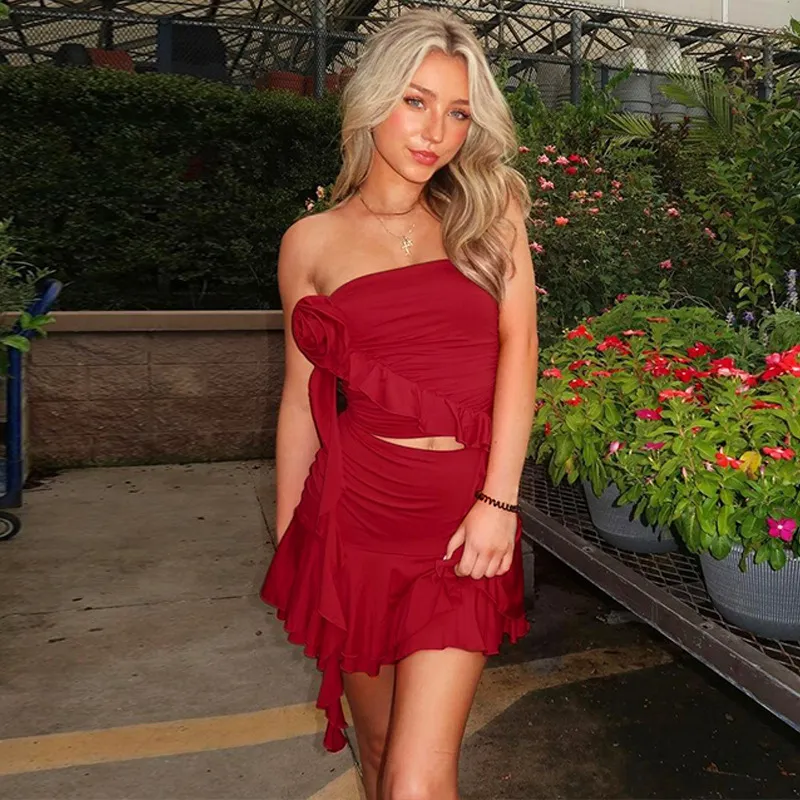
Understanding the Core Logic Behind Wholesale Clothing Sets
Wholesale clothing sets operate on one fundamental principle: scale creates power. When suppliers sell Wholesale Clothing Sets in bulk—typically 10, 50, or even 100 sets per order—the cost per unit drops sharply. That price advantage gives retailers, online sellers, and distributors a weapon that individual-piece sourcing simply cannot match.
Unlike single garments, sets are designed to sell as a complete solution. Customers are no longer buying “a top” or “a pair of pants”; they are buying a finished outfit. This dramatically improves conversion rates and average order value, especially for popular categories like Wholesale Joggers Sets, Wholesale Skirts Sets, and Wholesale Shorts Sets.
From a supplier’s perspective, sets streamline production. Fabrics are purchased in larger quantities, patterns are standardized, and size grading becomes more predictable. This efficiency is why Wholesale Joggers Sets Womens and Crop Top Skirt Set Wholesale products often offer better margins than standalone fashion items.
Size and style packaging also plays a crucial role. Most wholesalers bundle sets in pre-arranged size runs such as S–M–L or full-size assortments. This reduces picking errors and allows sellers to satisfy a broader customer base without micromanaging stock. Seasonal bundles—spring-summer casual sets, fall knit sets, or athletic lounge sets—are particularly effective for fast-moving e-commerce channels.
Minimum Order Quantity (MOQ) is where many newcomers hesitate, but experienced buyers understand its strategic value. A MOQ of 20–50 sets per style is not a barrier; it is a gateway to lower pricing, priority fulfillment, and stronger supplier relationships. Serious platforms like FashionTIY structure their MOQs to support both scaling sellers and test-market retailers, which is why they have become a go-to wholesale destination.
Logistics completes the equation. Mature suppliers maintain ready stock or fast replenishment cycles, shipping orders within 7–15 days and offering global delivery options. This speed is critical when selling trend-driven products like Wholesale Two Piece Sets, where delays can mean missed seasons and lost revenue.
Customization Services: Turning Clothing Sets into Brand Assets
Wholesale alone builds volume. Customization builds brands.
Customization services transform ordinary clothing sets into exclusive merchandise. When buyers choose Custom Women Sets, Custom Mens Sets, or Custom Kids Sets, they are no longer competing on price alone—they are competing on identity.
Customization allows control over fabric selection, color palettes, print techniques, silhouettes, and trim details. Whether it is embroidered logos on Wholesale Joggers Sets, branded waistbands on Wholesale Shorts Sets, or private-label packaging for Wholesale Men Sets, every detail reinforces brand recognition.
Branding elements such as woven labels, hang tags, wash labels, and custom packaging elevate perceived value. A simple Wholesale Skirts Sets item can double its retail price once positioned as a branded collection rather than a generic product.
However, customization demands commitment. MOQs are typically higher—often starting from 100 to 300 sets—because suppliers must absorb costs related to pattern development, sample production, and setup fees. The deeper the customization, the higher the unit cost. But experienced brands understand this trade-off: higher upfront investment leads to stronger margins and customer loyalty.
Sampling is a non-negotiable stage in customization. The process usually follows a clear sequence: design submission, pattern making, sample creation, sample approval, bulk production, quality inspection, and final delivery. While this extends lead time compared to ready-stock wholesale, it dramatically reduces the risk of post-production disputes.
FashionTIY bridges the gap between speed and customization by offering flexible private-label options alongside existing Wholesale Clothing Sets inventory. This hybrid approach allows sellers to test markets with ready-made designs before committing to full-scale custom production.
For sellers who want to escape price wars, customization is not a luxury—it is a strategic necessity.
Manufacturing Power: Where Scale, Cost, and Control Converge
Manufacturing is where true supply chain dominance begins. Unlike wholesalers who distribute finished goods, manufacturers control the entire lifecycle of clothing sets—from raw materials to final packaging.
Large-scale manufacturers operate their own workshops, sewing lines, and finishing departments. This vertical integration enables lower costs, consistent output, and stable delivery schedules. When producing high-volume orders of Wholesale Joggers Sets Womens or Wholesale Kids Sets, this operational control becomes a decisive advantage.
Strong manufacturers maintain direct relationships with fabric mills, dye houses, printing facilities, and accessory suppliers. This eliminates unnecessary middlemen and allows for flexible production planning. Whether scaling up a viral Crop Top Skirt Set Wholesale design or adjusting materials due to market feedback, manufacturers can respond quickly.
OEM and ODM services further expand manufacturing capabilities. OEM production focuses strictly on execution—clients provide designs, and factories produce accordingly. ODM services, on the other hand, include design development, sampling, and full production support. For emerging brands, ODM is often the fastest route to launching a complete Wholesale Clothing Sets line without an in-house design team.
Quality control is where serious manufacturers separate themselves from low-tier suppliers. Fabric inspection, size tolerance checks, stitching evaluations, and final random inspections ensure consistency. Many manufacturers also offer third-party inspection reports, which are essential for international buyers concerned about compliance and returns.
Manufacturing is not just about making products—it is about building a predictable, scalable business model. Sellers sourcing Wholesale Men Sets or Wholesale Two Piece Sets directly from factories gain long-term pricing stability and supply reliability that pure resellers simply cannot offer.
Why Integrated Wholesale, Customization, and Manufacturing Wins
The most competitive suppliers today no longer operate in silos. They offer integrated solutions that combine ready-stock wholesale, customization services, and in-house manufacturing. This three-in-one model is reshaping how global buyers source Wholesale Clothing Sets.
One-stop sourcing eliminates friction. Buyers can start with ready-made Wholesale Joggers Sets, move into Custom Women Sets, and eventually scale into full OEM or ODM production—all with the same supplier. This continuity reduces communication errors, speeds up decision-making, and builds trust.
Profit margins also improve. Factory-direct pricing cuts out unnecessary intermediaries, while customized products command higher retail prices. Sellers offering branded Wholesale Shorts Sets or exclusive Wholesale Skirts Sets collections consistently outperform generic competitors.
Inventory flexibility is another major advantage. Hot-selling styles can be replenished quickly from stock, while customized items receive dedicated production slots. This hybrid approach reduces overstock risk and supports smarter cash flow management.
FashionTIY exemplifies this integrated model. By combining massive Wholesale Clothing Sets inventory with customization options and factory-backed production, it allows sellers to scale at their own pace. The platform’s positioning as a “70%+ Cheap Best Wholesale Market and Suppliers” hub is not marketing hype—it reflects structural cost advantages embedded in its supply chain.
Choosing the Right Model Based on Your Business Goals
The smartest sourcing strategy depends entirely on who you are and where you want to go.
Retailers and e-commerce sellers focused on speed should prioritize ready-stock Wholesale Clothing Sets with light customization. This approach minimizes risk and accelerates product launches.
Brand builders should invest in Custom Mens Sets, Custom Women Sets, or Custom Kids Sets through OEM or ODM manufacturing. Control over design and branding is essential for long-term differentiation.
Distributors and wholesalers benefit most from combining stock wholesale with private-label customization. Offering exclusive Wholesale Men Sets or seasonal Wholesale Two Piece Sets under a proprietary label creates defensible market space.
Fabric selection, production techniques, MOQ structures, logistics planning, and quality systems all influence profitability. Cotton versus polyester affects comfort and cost. Printing versus embroidery changes both branding impact and unit pricing. Shipping speed and customs efficiency determine how quickly products reach overseas markets.
Ignoring these factors is expensive. Mastering them is powerful.
Wholesale clothing sets are not a trend—they are a structural shift in how fashion is produced, sold, and scaled. From Wholesale Joggers Sets Womens to Wholesale Kids Sets, from generic stock to fully customized collections, the businesses that understand the full ecosystem will dominate their niches.
In a market where margins are thin and competition is brutal, knowledge is leverage. Platforms like FashionTIY give sellers access to that leverage, but execution determines success.
If you want faster turnover, stronger branding, and higher profit per order, then mastering Wholesale Clothing Sets is not just something you need to know—it is something you need to act on.


评论
发表评论